
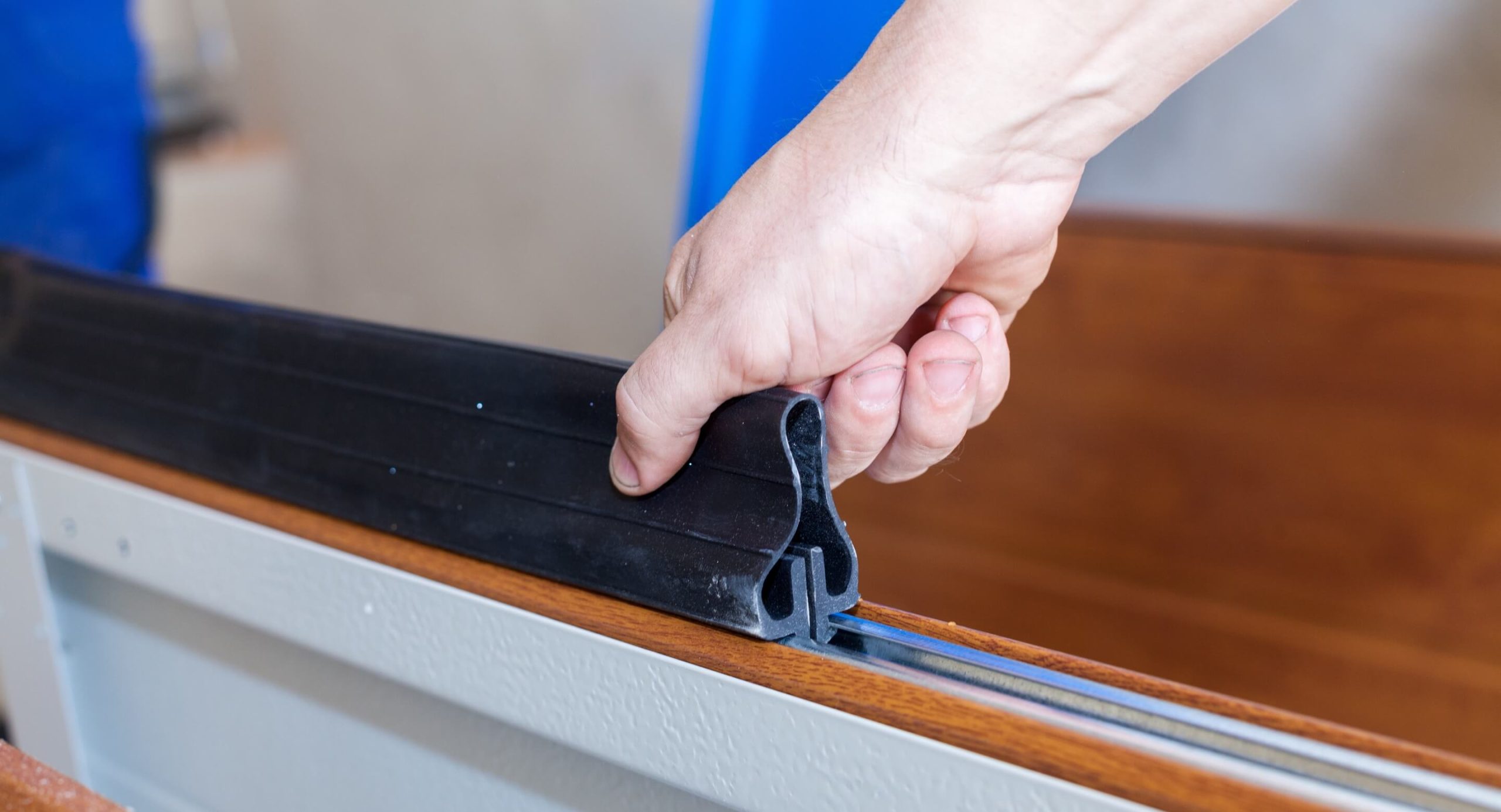
Weather stripping seals the gaps around a garage door: a threshold or bottom seal at the floor, and top and side seals where the door meets the frame. Match the seal to the retainer profile, door width and gaps. Replacement cost depends on that profile, material, damaged retainers and installation labor.
Types by location
| Type | Where it goes |
|---|---|
| Bottom or threshold seal | Floor gap under the closed door |
| Top and side seal | Gaps between the door and the frame |
| Door stop weatherstrip | Wraps the outside edges for a tighter seal against the door itself |
| Brush seal | Fine fibers for larger or uneven gaps |
Materials
Rubber and vinyl are the most common, both durable and resistant to temperature swings. Silicone resists water well. Felt is the least durable but the least expensive.
Installing it yourself
Clean the area, measure the door, cut the strip to length, and attach it with the nails, screws or adhesive the product specifies, then check the full width for gaps once it is closed. Side and top seals can often be fitted with the door closed. A bottom seal may require securing a raised door; never work beneath one supported only by the opener or remove cable brackets to reach the retainer. Use a technician if access is not safe.
When to replace it
Replace weather stripping when you notice drafts, daylight, moisture or pests getting through, or when the material has visibly cracked or come loose. Expect to replace it every few years depending on material and climate exposure.
For the bottom seal specifically, see our bottom seal guide, or our step-by-step install guide. Questions, or want it done for you? Call (916) 838-8182.


Share:


