
Swing-out garage doors are side-hinged doors that open outward from the center, like a pair of carriage house doors, with no overhead track. They need clear, level space in front of the garage for each door to swing through. They make sense when you want the garage ceiling free or the authentic carriage house look.
How much clearance do swing-out doors need?
- In front: each door sweeps an arc as deep as the door is wide. A door split into two equal halves needs clear space in front at least half the opening's width deep. A 16-foot opening, for example, needs about 8 feet clear.
- Level ground: check the ground through the entire swing arc. A driveway that rises in the direction the leaf opens, a curb, or a parked vehicle can block it.
- At the sides: if you want the doors to fold back flat against the house, you need open wall space beside the opening about as wide as each door.
- Near the street: on a short driveway, the doors can swing into the sidewalk or street. Measure before you choose this style.
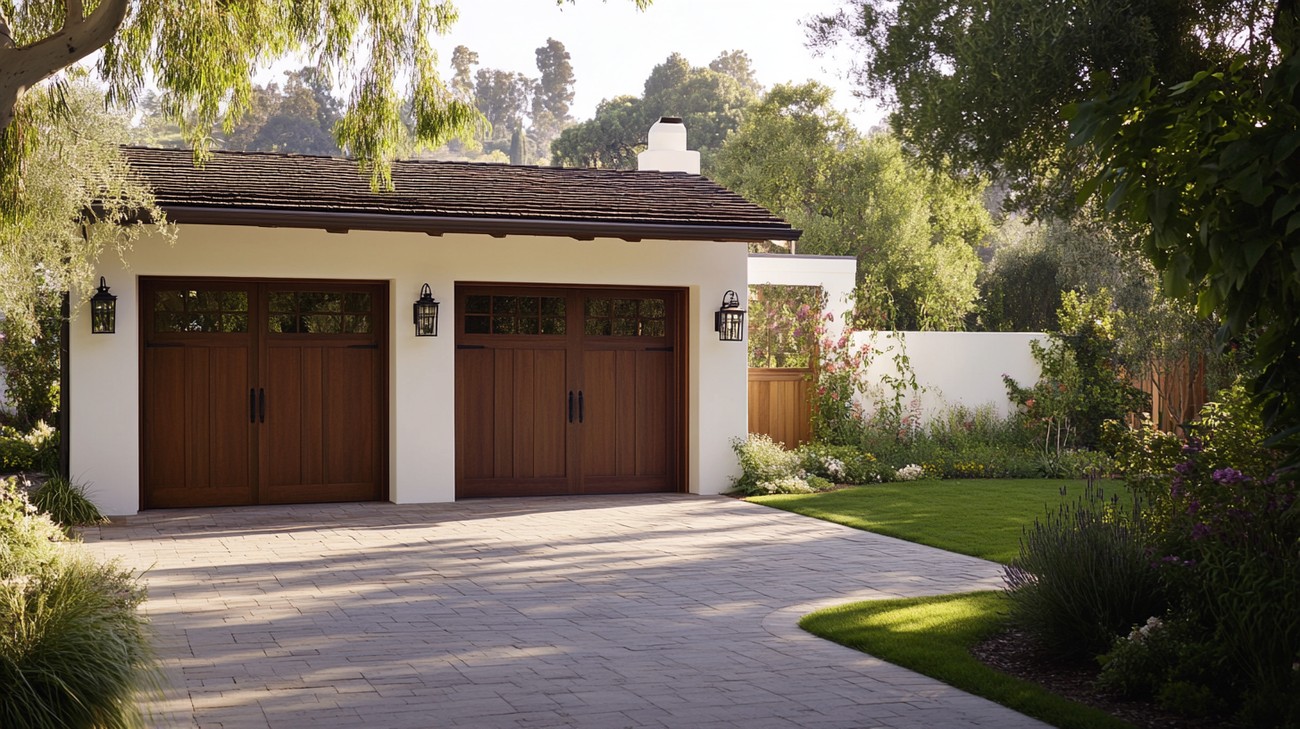
When do swing-out doors make sense?
- You want the garage ceiling clear, because there are no tracks overhead.
- You want an authentic carriage house door on a traditional or rustic house.
- The garage is a workshop or storage space you open less often.
- You have a deep, level driveway.
When is an overhead door the better choice?
- Your driveway is short, the ground rises into the opening leaves' path, or the garage sits close to a sidewalk.
- The spot is windy. Strong wind can catch an open door and damage it.
- You want a standard opener. Swing-out doors need an opener designed for swinging doors, and not every door and opener are compatible.
- You like the look but not the clearance. A carriage-style overhead door lifts on tracks and only looks like it swings. See carriage garage doors.
Pros and cons
Pros
- No overhead track, so the ceiling space inside the garage stays open.
- An authentic carriage house look, with a wide choice of styles, windows, colors, finishes and hardware.
- No overhead track or sectional roller system; the hinges, catches and any powered operator still require maintenance.
- Can be as secure as other doors when fitted with heavy-duty hardware and good locks.
Cons
- Needs clear, level space in front. Wind can damage doors left open, and anything in the swing path blocks them.
- Often costs more than a conventional overhead door, and it should be installed by a professional so the doors hang level, balance and close evenly.
- Gaps can develop around the sides and base over time, letting in drafts and bugs. Compare the full door construction and perimeter seals instead of assuming performance from wood alone.
- Automation needs a compatible opener made for swinging doors.
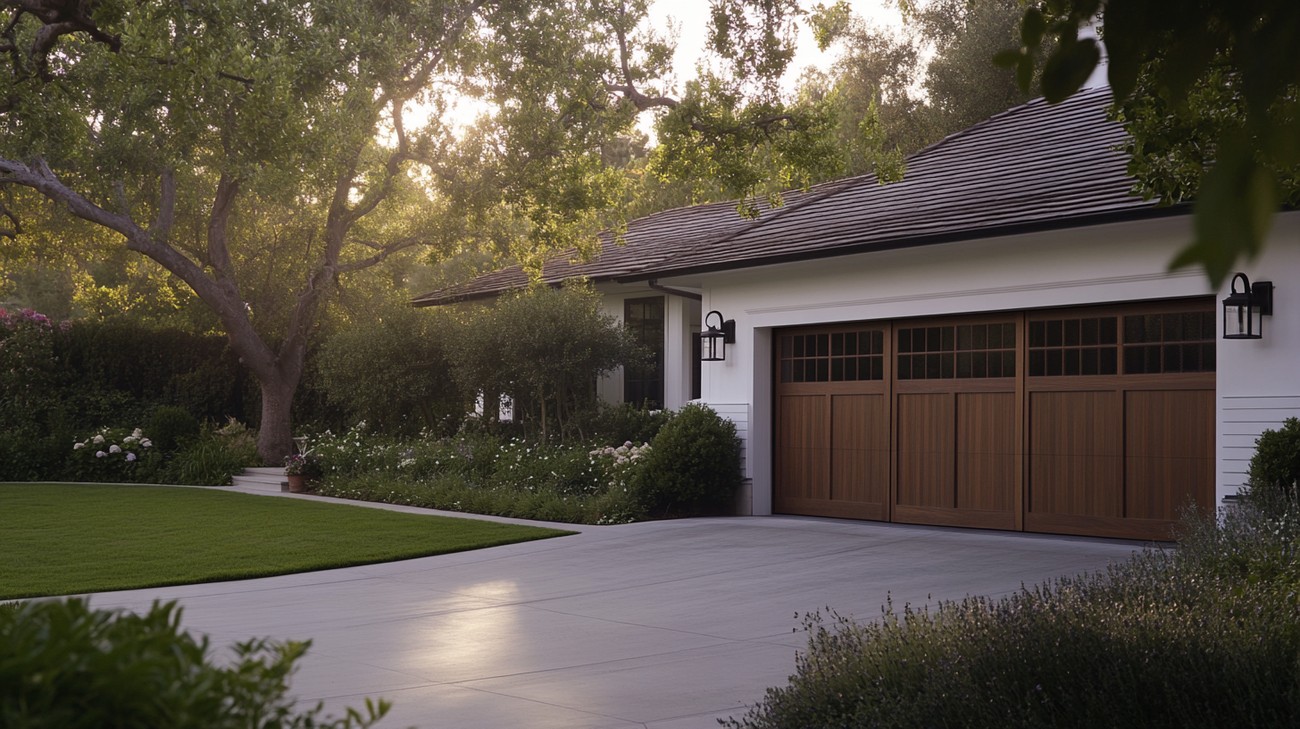
Materials
- Wood: the traditional choice with the most customization, but it needs regular painting or varnishing.
- Steel: sturdy, low maintenance, usually less expensive than wood, and can be styled and painted to look like wood.
- Fiberglass: durable, can mimic wood, and needs less upkeep than wood.
- Aluminum and vinyl swing-out doors are also made.
Maintenance
- Check the hinges often. They carry each door's full weight, and worn hinges let the doors sag and rub.
- Watch the seals and the gaps at the sides and bottom.
- Clean the doors regularly, and repaint or reseal wood as the finish wears.
- Use the hinge and lock manufacturer's care instructions. Do not loosen hinges carrying a door leaf; secure wind restraints as directed.
Looking for a "swing up" garage door? That is a different design: a one-piece tilt-up door that pivots up and out. Our guide to types of garage doors compares it with swing-out, sectional, roll-up and sliding doors.
Weighing a swing-out door against a carriage-style overhead door? 1A Garage Doors gives free estimates on new doors. Call (916) 838-8182 or see our garage door installation page.


Share:


