
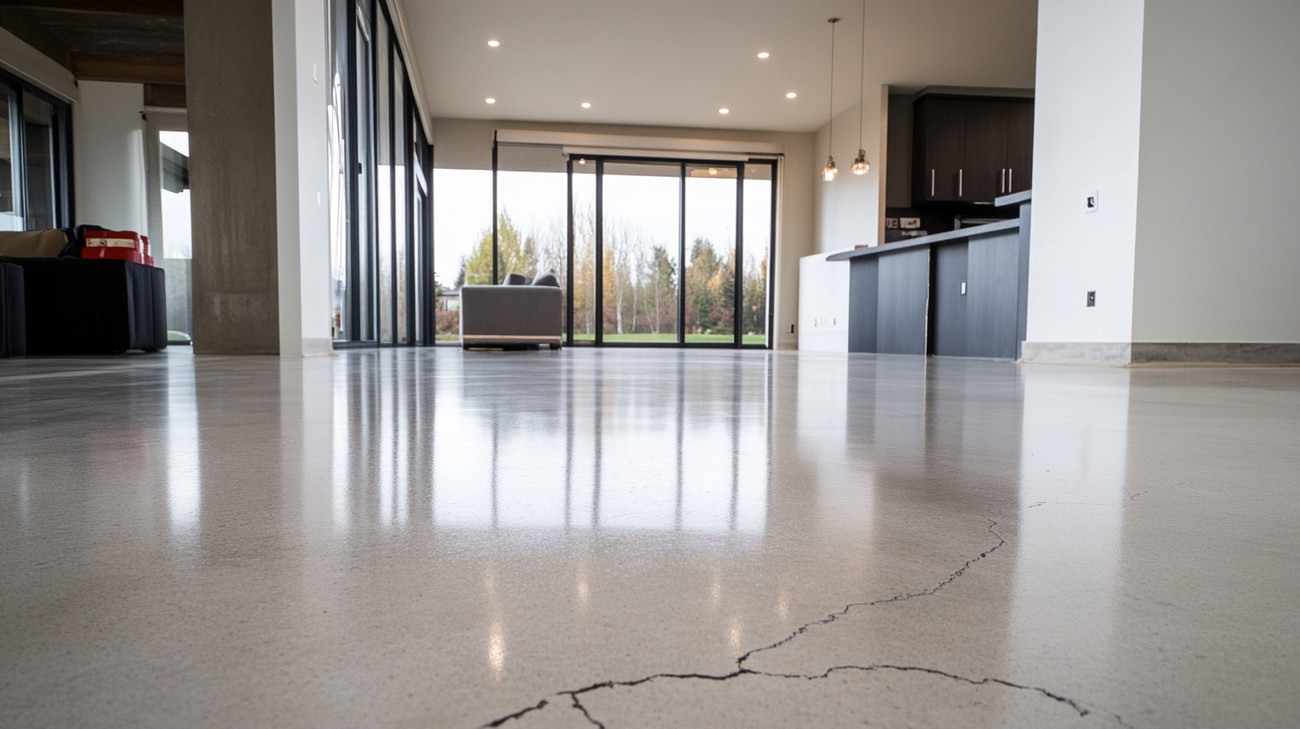
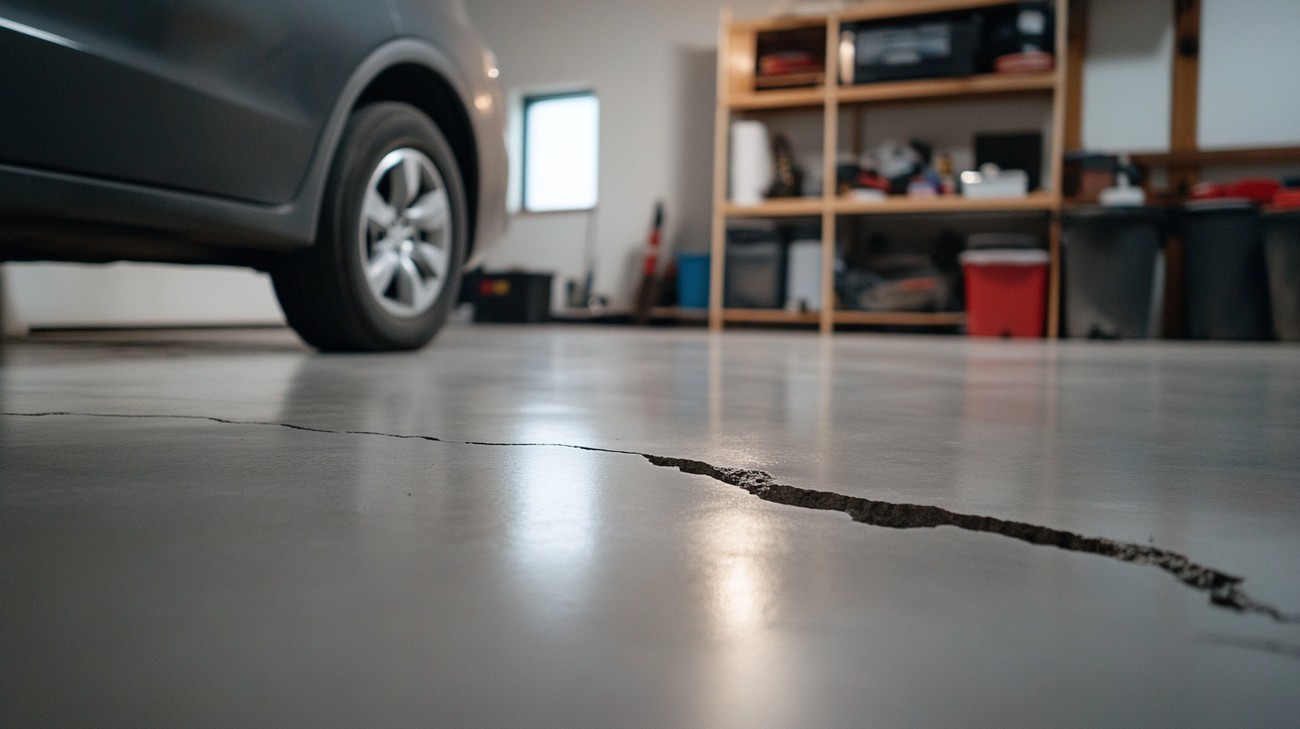
Garage floor cracks come from normal concrete shrinkage, temperature swings, or heavy loads, and most hairline cracks are a simple DIY fix with a concrete sealer or epoxy filler from a hardware store. Wider or deep cracks, or ones that keep reopening, are worth a professional opinion. This isn't a service we offer, but here's what's involved.
Assessing the Crack
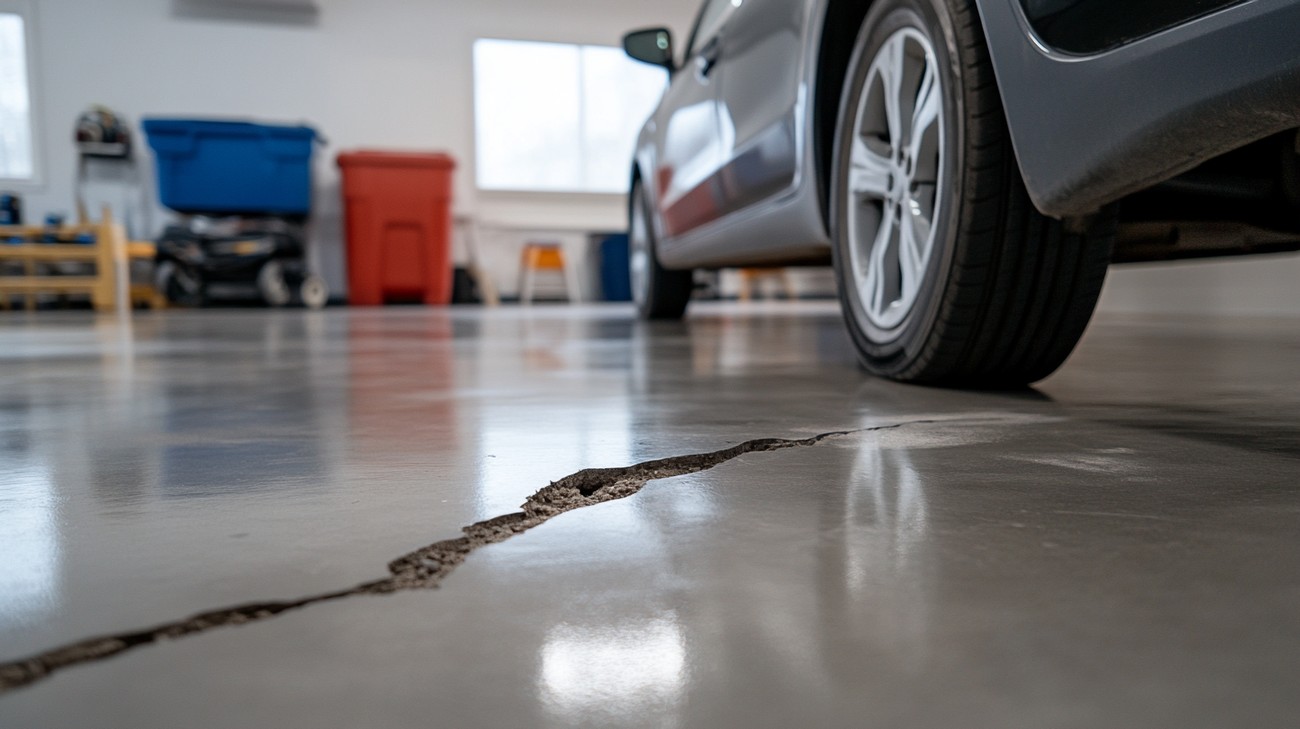
Width alone cannot diagnose a crack. A narrow, stable surface crack may be suitable for a patch, but raised edges, spreading cracks, moisture, nearby wall movement or repeated reopening need a concrete professional's assessment before filling.
Repairing a Minor Crack
- Clean out dust, debris, and loose concrete from the crack.
- Choose a repair product rated for the crack's width, depth, movement and moisture condition. Epoxy is not appropriate for every moving crack; follow the product's preparation and protective-equipment instructions.
- Apply the product following the manufacturer's instructions, and let it cure fully before driving or parking on it.
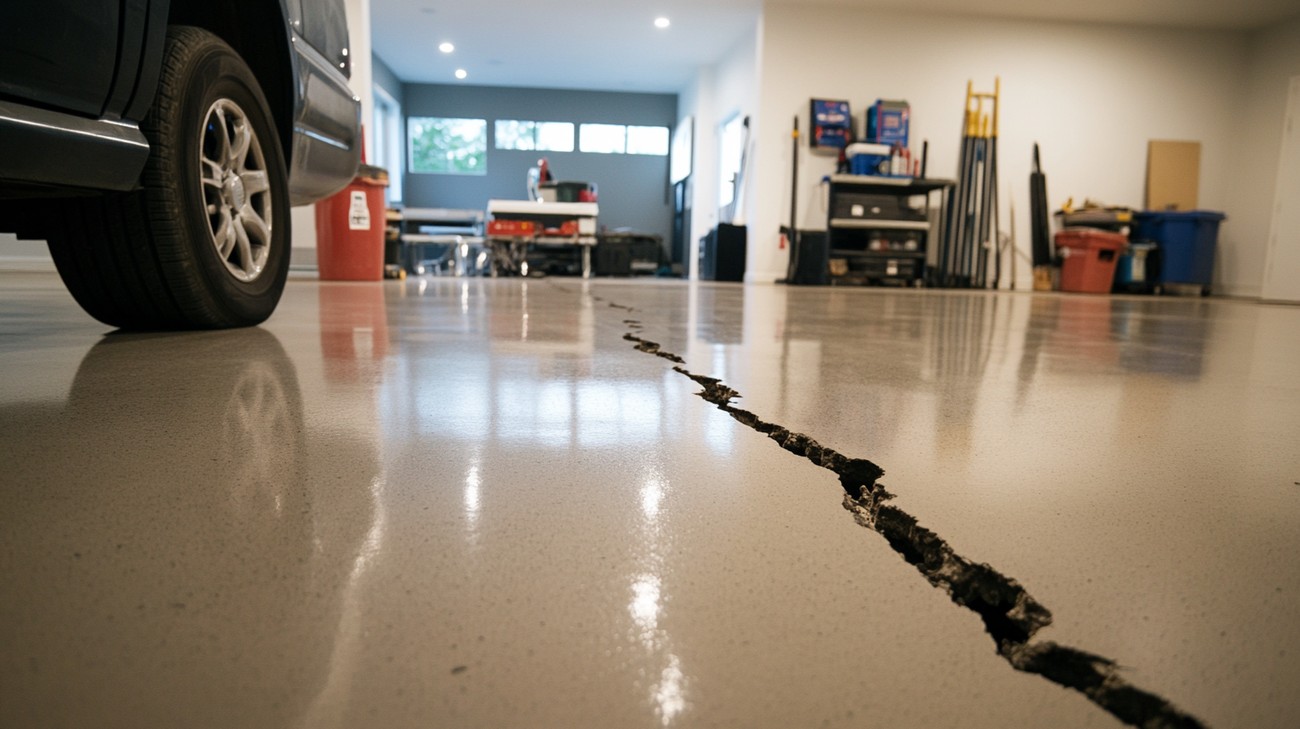
When to Call a Concrete Professional
Cracks wider than about a quarter inch, ones that keep coming back, or ones running across the whole slab can indicate a structural issue that a DIY kit won't fix. A concrete contractor can diagnose the cause and recommend the right repair.
FAQ
Can I use my garage while a floor crack is being repaired?
Keep it empty of vehicles and stored items until the repair material has fully cured, for the vehicle-traffic cure period specified by the product; this varies with the material and temperature.
Will a repaired crack come back?
It can, especially if the underlying cause, ground movement or ongoing settling, wasn't addressed. Diagnosing the cause matters as much as the patch itself.
Floor repair isn't something we do; we focus on garage doors. If it's your door that needs attention, call (916) 838-8182 or see garage door repair.


Share:


