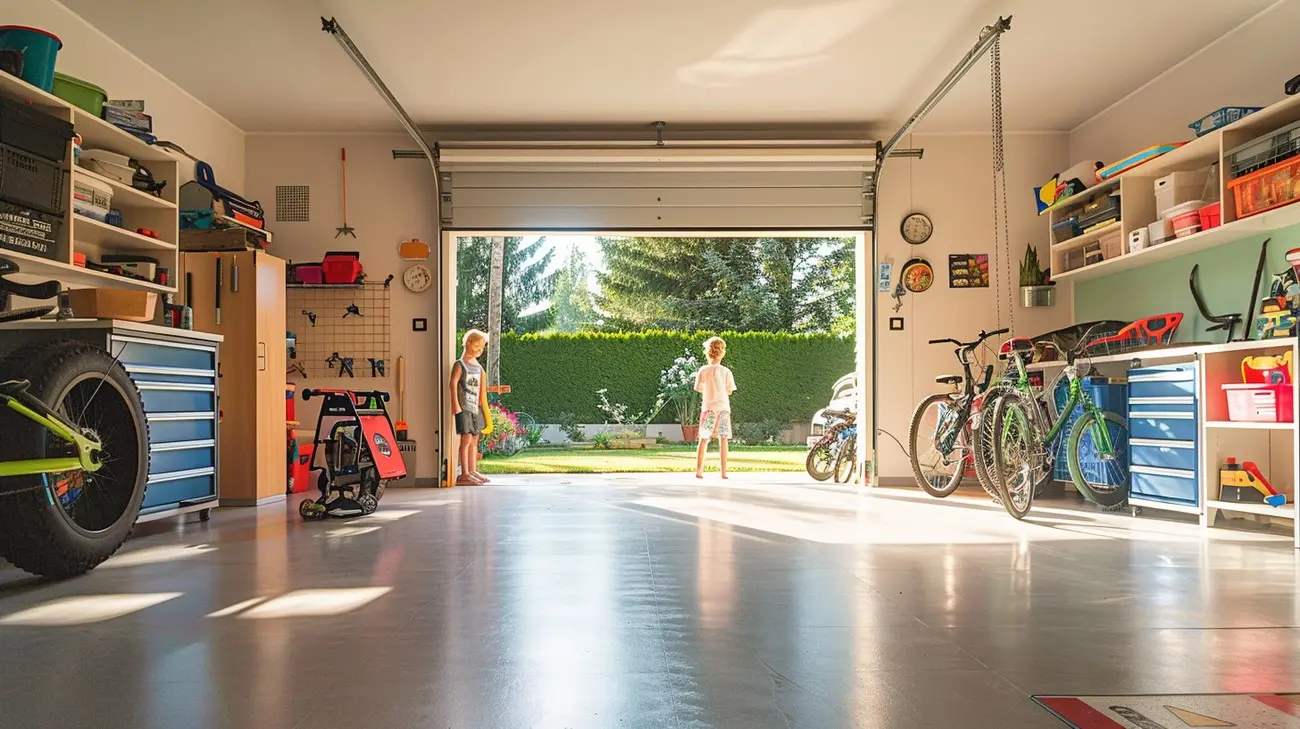
Use the lubricant and lubrication points specified in your door manual. Hinge pivots and serviceable roller bearings commonly need lubrication; nylon wheel surfaces and sealed bearings generally need no spray. Leave tracks dry. Work only on a closed, undamaged door with opener power disconnected, and follow the manual's maintenance schedule.
Step-by-step
- Start with the door fully closed and undamaged. Disconnect opener power, including backup power as the manual directs. Gather the specified lubricant and a clean cloth.
- Wipe down the tracks and moving parts with a dry or lightly damp cloth to clear dirt and debris.
- Lubricate hinge pivots and serviceable roller bearings or stems only where the door manual specifies. Do not spray nylon wheel surfaces or sealed bearings unless their manufacturer directs it.
- If the door manual calls for spring lubrication, apply the specified product with the door fully closed. Do not touch or adjust spring hardware.
- Lubricate the opener rail or screw only where its manual directs. Do not spray the drive belt; follow the model's separate chain instructions.
- Wipe off any excess so it does not attract dust and grime.
What not to lubricate
Leave the track surface alone. Rollers need to roll against clean, dry metal, and lubricant there just attracts dirt and can make them slip. Keep lubricant away from the opener's motor housing and electronics too; that is not a part that needs it.
How often
Follow the door manual's schedule, commonly every six months. Mild squeaking on a smooth, undamaged door may improve with the specified lubrication. Grinding, binding or uneven movement needs inspection before further operation.
Frequently asked questions
Should I lubricate the garage door tracks?
No. The tracks are a guide surface for the rollers, not a moving joint, and lubricant there attracts grit.
What if the door still makes noise after lubrication?
That usually means worn rollers or loose hardware rather than a lubrication problem. Have a technician inspect persistent noise; do not tighten springs, cable drums, bottom brackets or track supports yourself.
What safety precautions should I take?
Lubricate with the door closed, keep your hands clear of moving parts and pinch points, and disconnect the opener if you are working near the trolley or rail.
Can I do this myself?
Yes. It is one of the simplest and most useful things a homeowner can do for their garage door.
Not sure which product to buy? See our lubricant buying guide, or our quick reference by part. We include lubrication in every tune-up. Call (916) 838-8182 to book one.

Share: