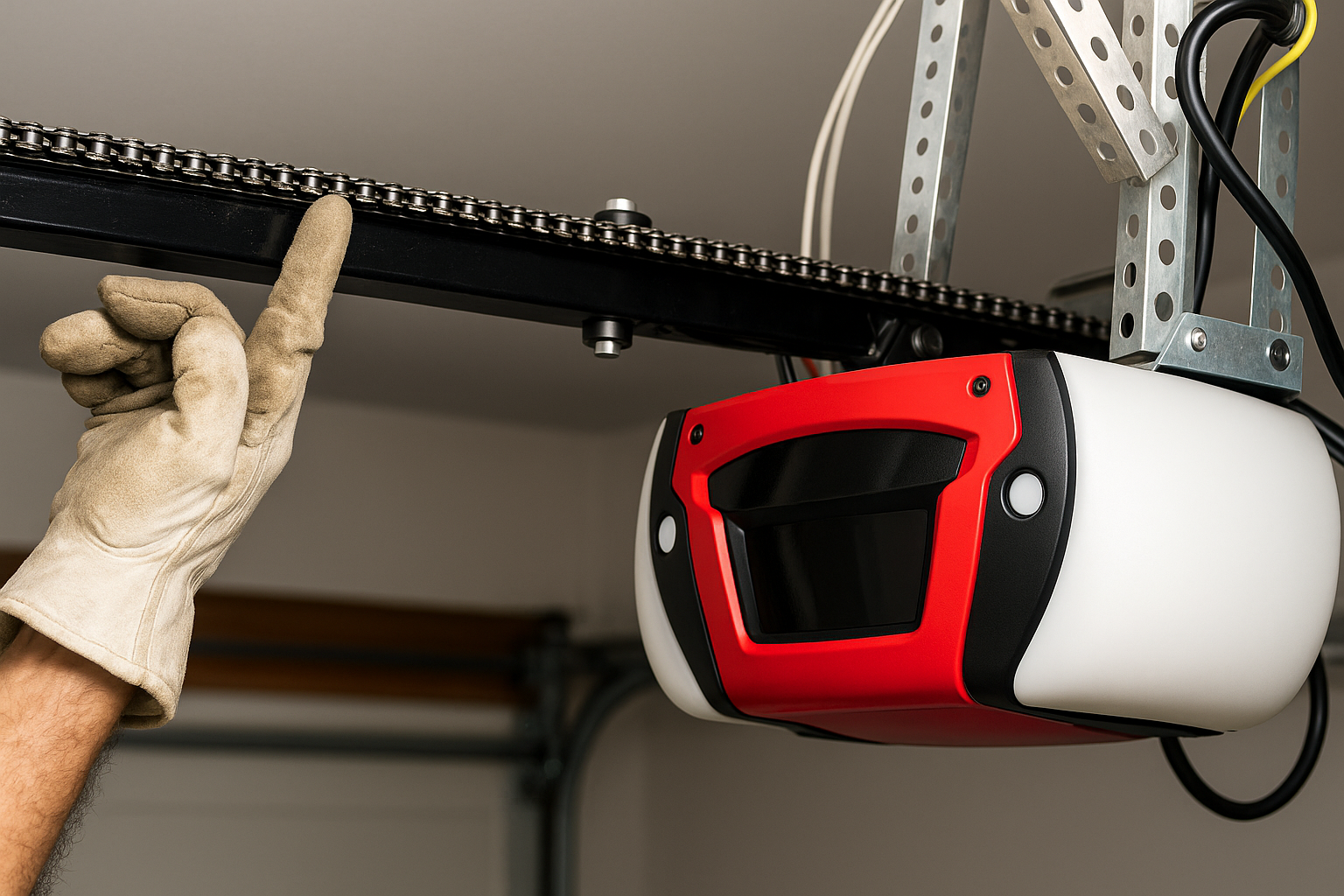
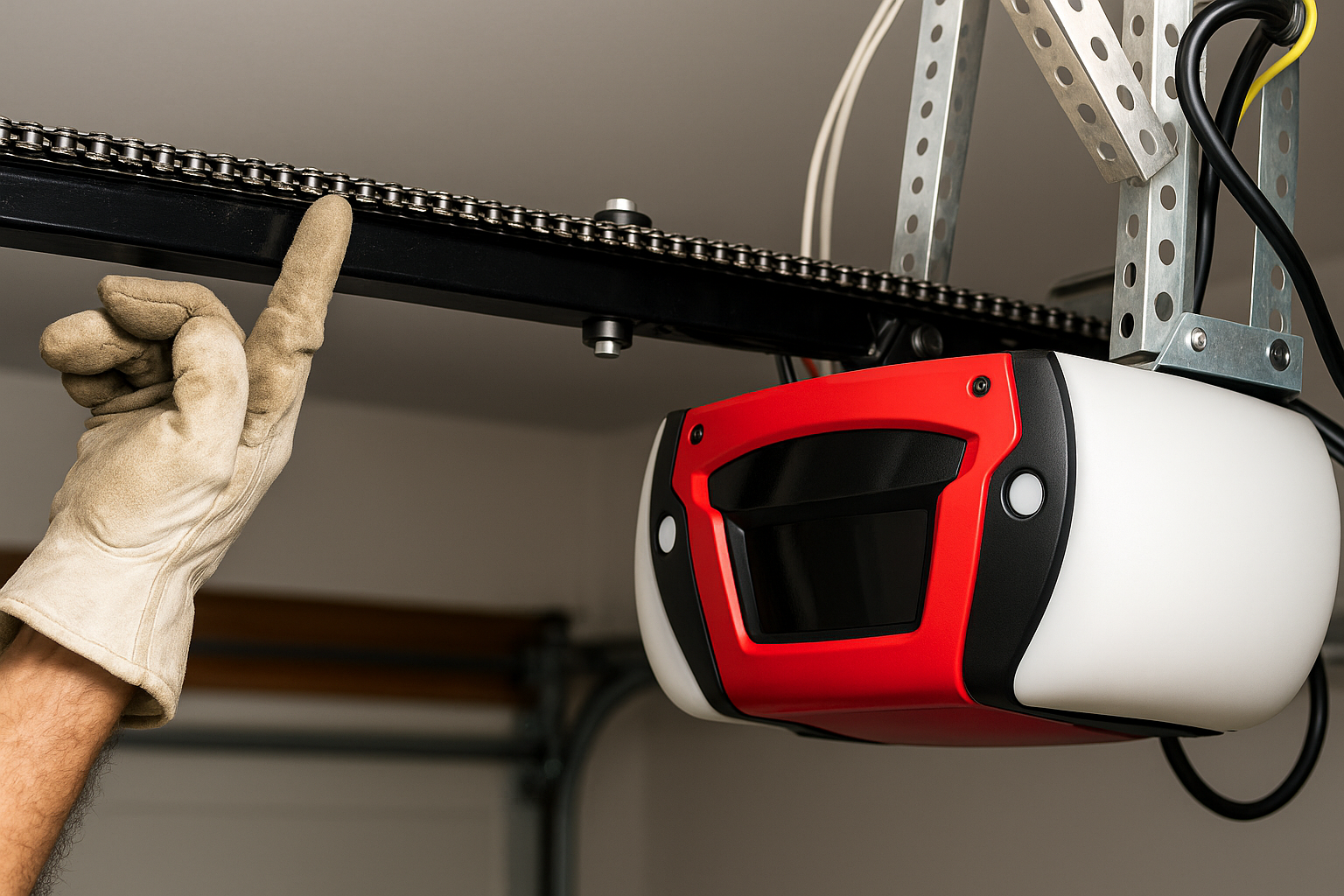
A chain-drive opener moves the door's trolley with a metal chain. It is often a lower-cost overhead option, but drive noise may be more noticeable near living space than with a belt. Choose the exact model for your door's size, weight and usage, not simply because it has a chain.
Chain versus belt drive
| Consideration | Chain drive | Belt drive |
|---|---|---|
| Noise | More drive noise and vibration can be noticeable. | Often quieter near living space. |
| Price | Often a lower starting price. | Often costs more for similar features. |
| Door capacity | Check the model limits. | Check the model limits. |
| Maintenance | Use the manual's tension and lubrication instructions. | Use the manual; do not apply lubricant to the belt. |
What to check before buying
Confirm the door type and height, rail length, electrical outlet, included controls and battery backup. New California residential opener installations require backup. Wi-Fi and lighting are separate features; a chain model may offer them too.
If the chain becomes noisy
New slapping, grinding or uneven movement deserves inspection. Do not tighten until every trace of slack disappears or apply lubricant based on a generic schedule. The required adjustment differs by model, and a door problem can overload a sound opener.
The manufacturer maintenance guidance recommends checking for damage and referring to the exact manual. Stop operating a binding door or one with damaged springs or cables.
See the belt versus chain comparison for the wider buying decision.
We service LiftMaster, Chamberlain, Genie, Craftsman and Linear openers. Call (916) 838-8182 or see opener repair and installation.

Share:


