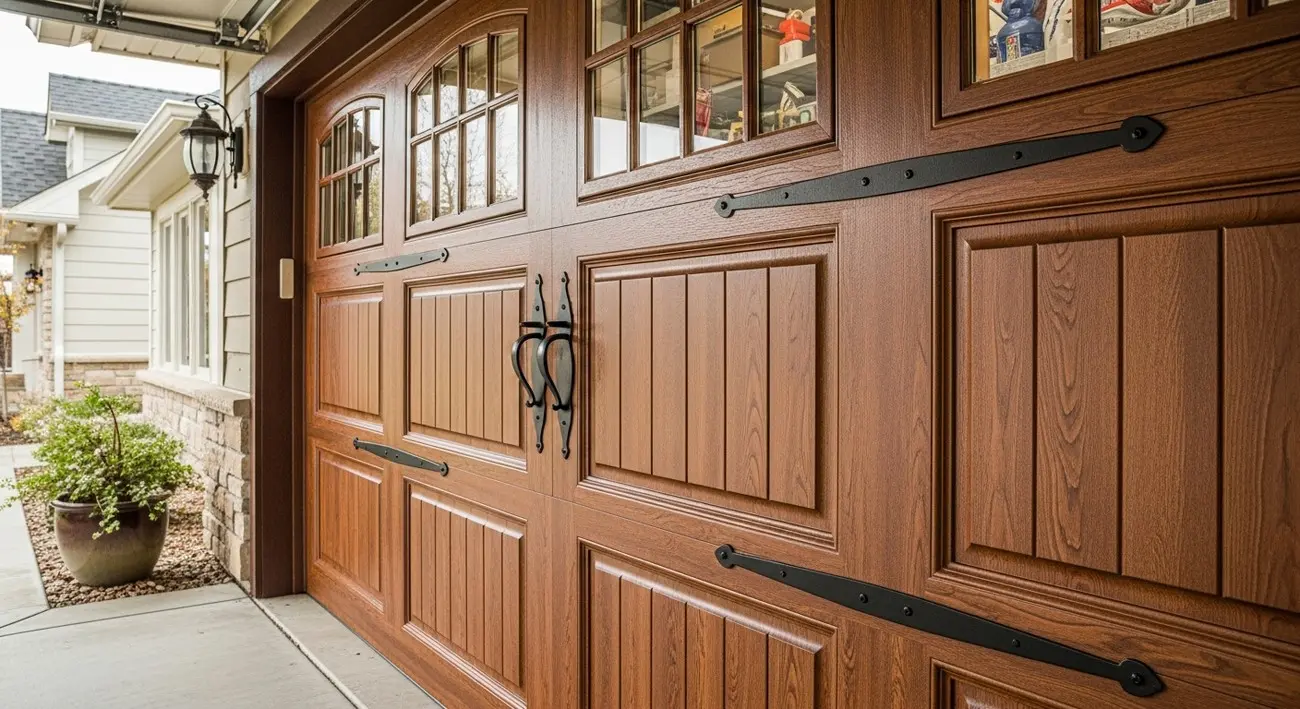
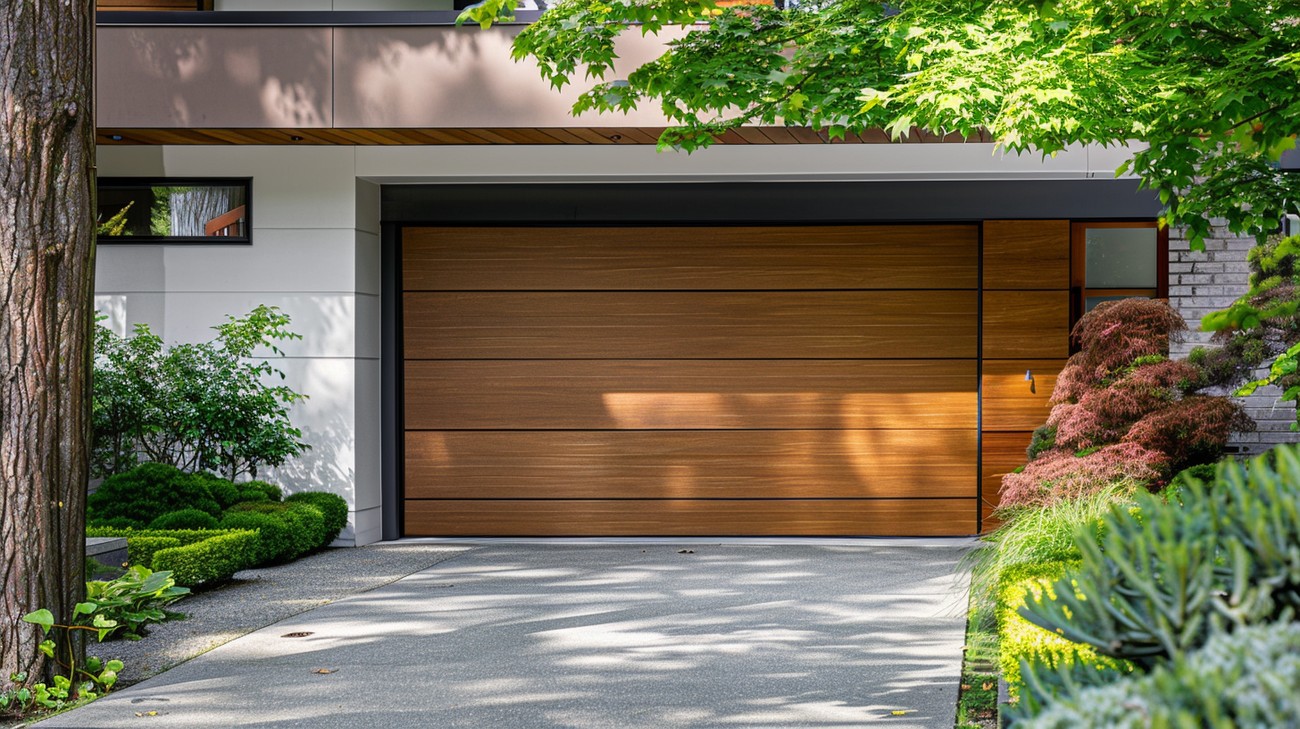
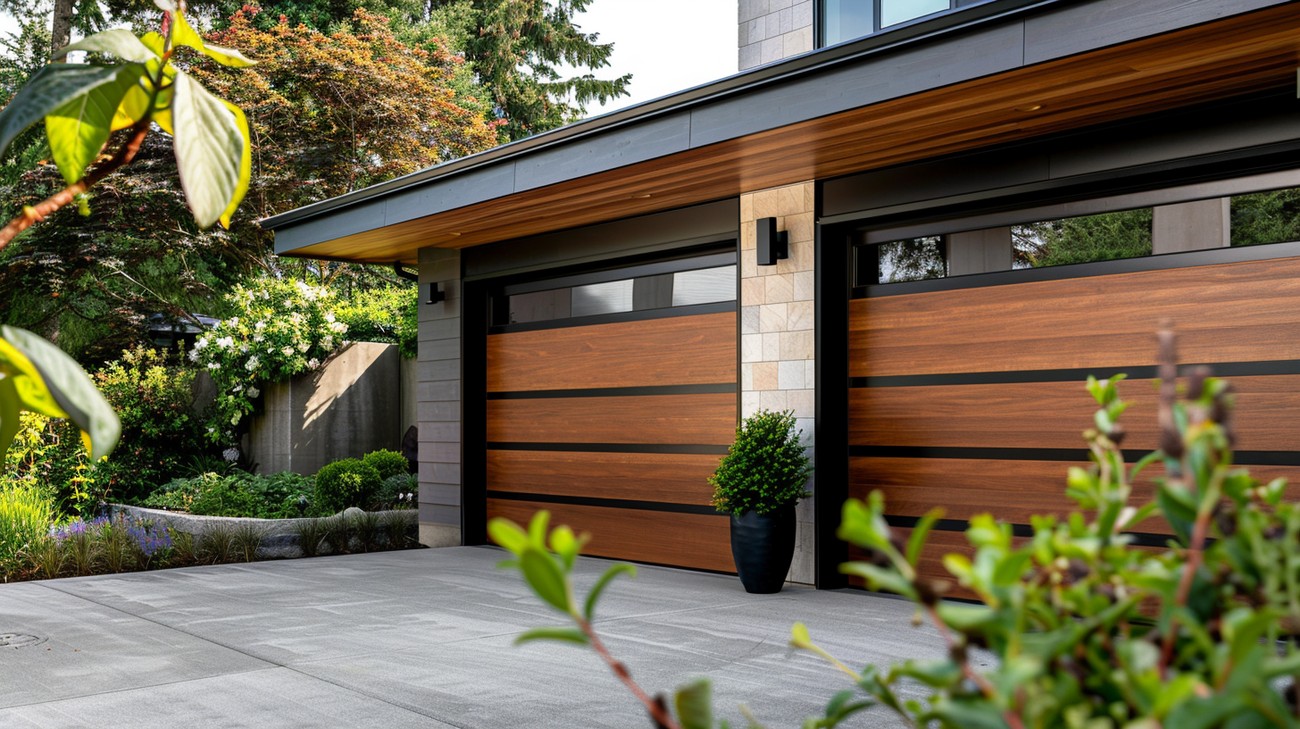
Fake wood garage doors are steel, fiberglass or composite doors finished to look like real wood. They suit anyone who wants the wood look without wood's upkeep. The tradeoff: they won't age or patina like real wood, and touch-ups after damage are harder to match.
How it compares to real wood
- Durability: resists rot, warping and insect damage that affect real wood over time.
- Cost: compare the same size, construction and finish. A printed steel finish and a thick composite overlay are different price points; reduced wood refinishing does not eliminate every future cost.
- Maintenance: follow the finish instructions; cleaning and touch-ups may still be needed even when routine wood staining is avoided.
- Resale: appearance can affect buyer preference, but a particular resale return cannot be promised.
- Character: real wood develops a natural patina with age that a manufactured finish doesn't replicate.
See our wooden garage doors guide for the real-wood side of that tradeoff.
Materials
- Printed steel: a woodgrain finish on steel; insulation and any overlay are separate construction choices.
- Fiberglass: a molded wood-look facing; the supporting structure, finish and care requirements depend on the model.
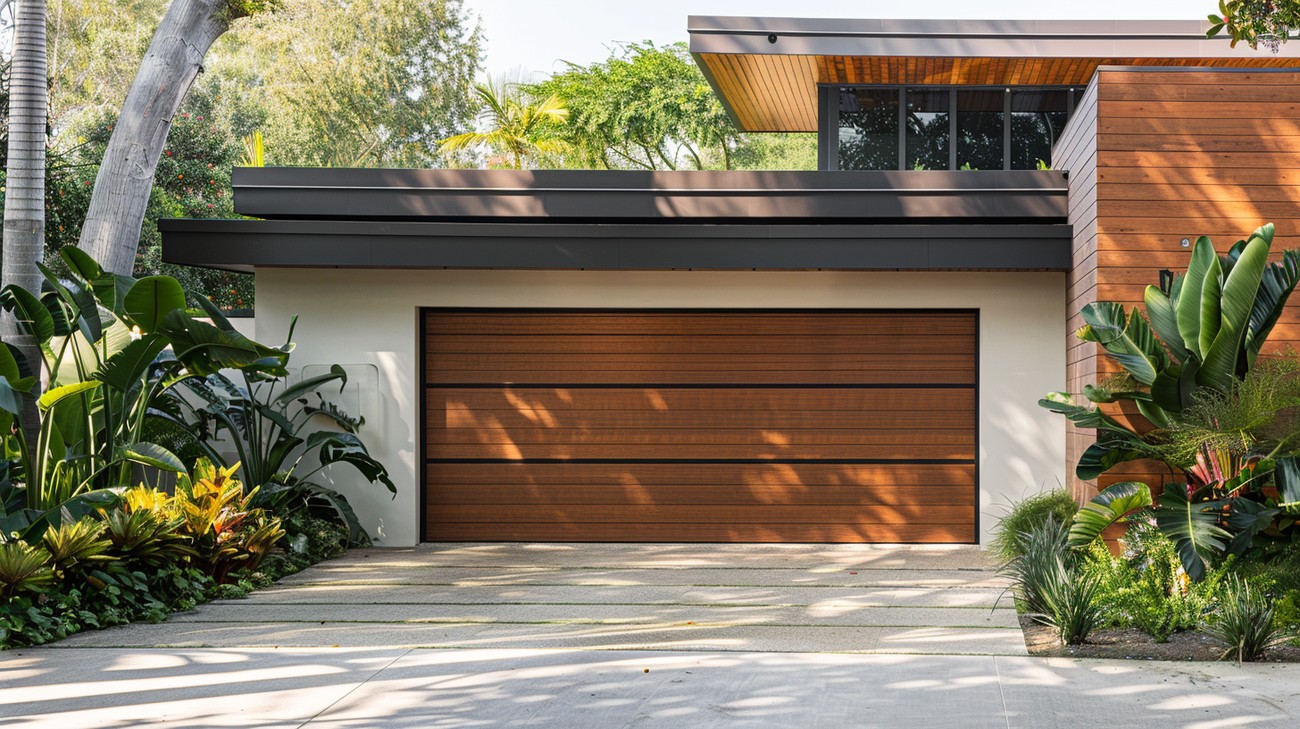
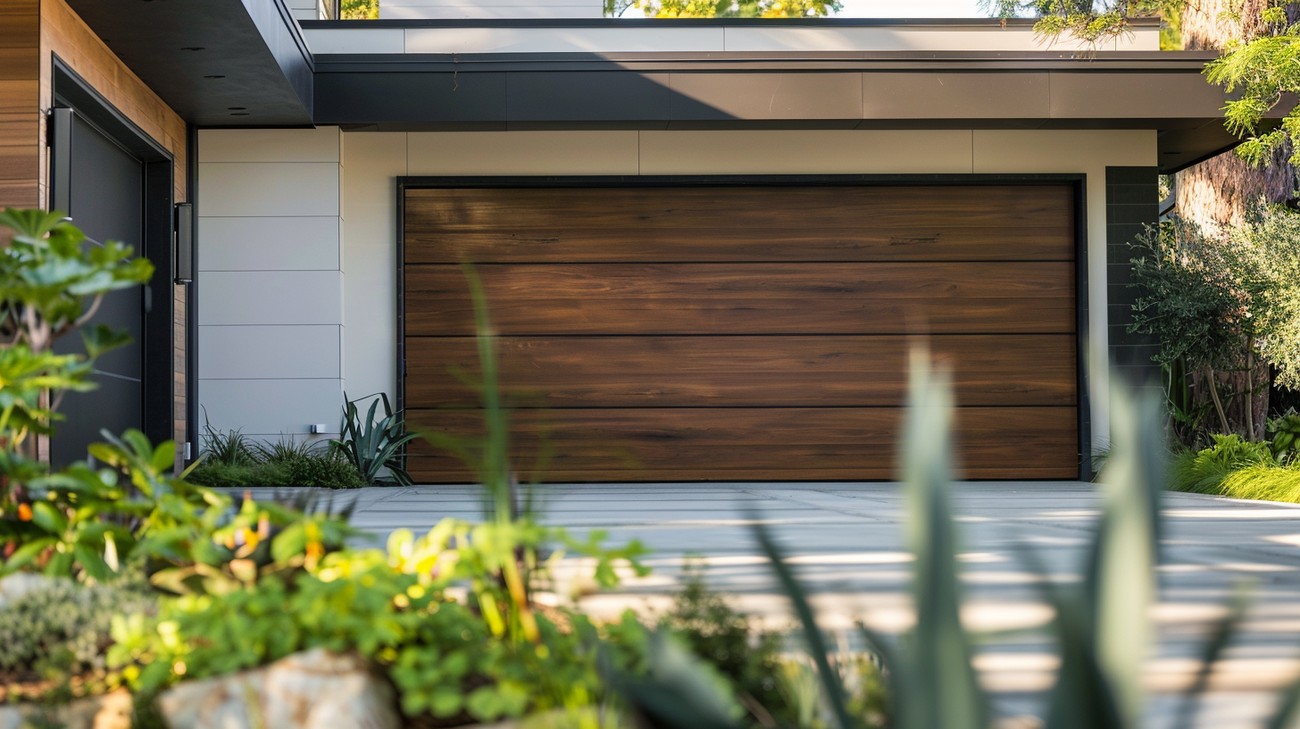
- Composite: a steel core with a wood-grain finish in tones like oak, mahogany, cedar or walnut.
Upkeep
Clean with mild soap and water, avoiding abrasive cleaners that can damage the finish. Inspect periodically for wear and lubricate moving parts. Ask the manufacturer about approved touch-ups if the finish is scratched or fades; matching a patterned or aged panel may be difficult.
See our faux wood garage doors guide for the material and style options in more detail. Thinking about a new door? 1A Garage Doors gives free estimates on new doors. Call (916) 838-8182 or see our garage door installation page.

Share: