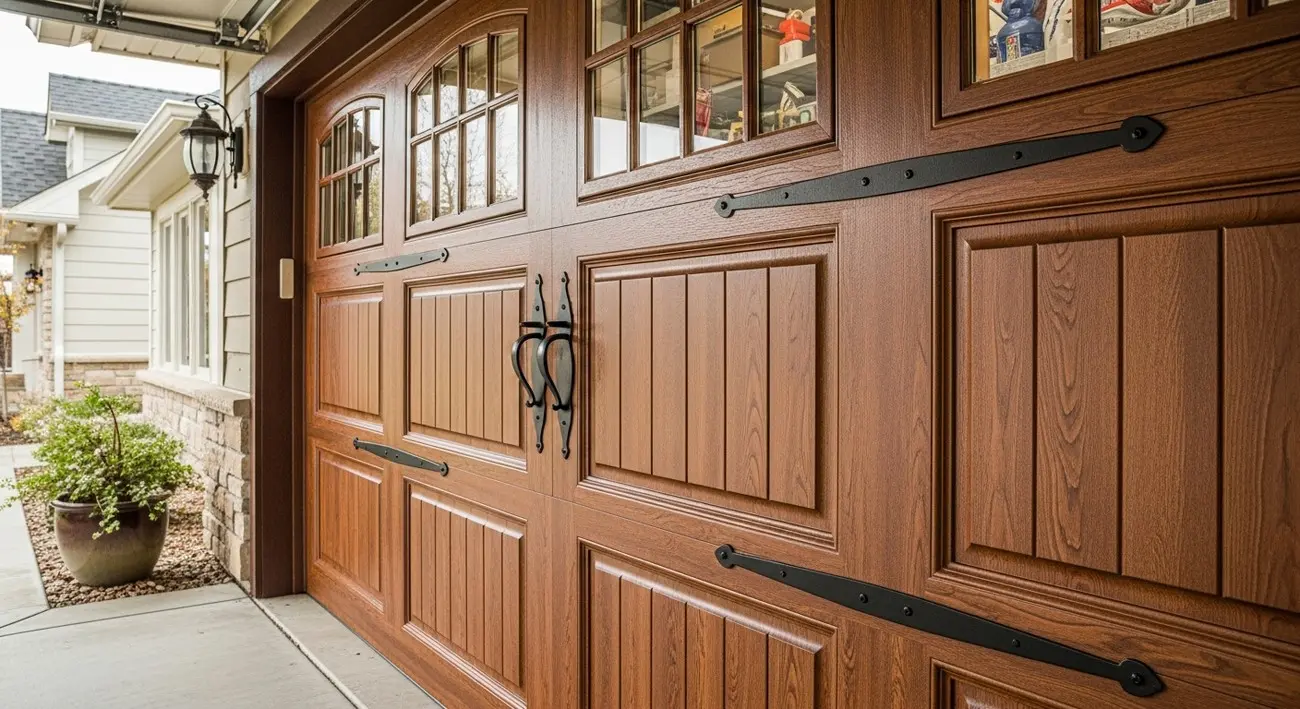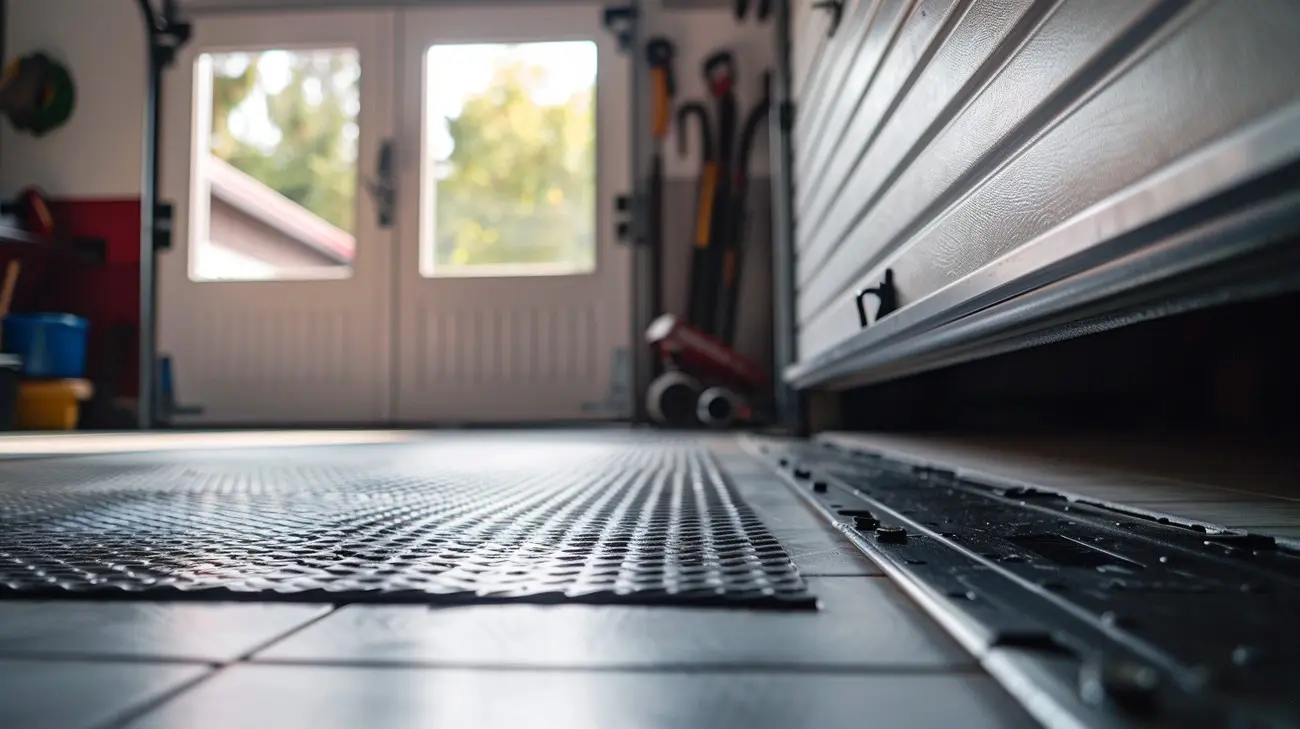
Faux wood garage doors are steel, fiberglass or composite doors finished to mimic real wood grain. They suit homeowners who want a wood look with less upkeep. The main tradeoff: mass-produced finishes look uniform compared with real wood's natural variation, and touch-ups can be hard to match.
Material options
- Steel: the most common choice; a wood-grain texture over a strong, secure core.
- Fiberglass: a molded wood-look facing; check the full door construction and care instructions.
- Composite: combines a durable core with a wood-look finish for both style and strength.
Pros, cons and upkeep
- Pro: resists rot, splitting and warping better than real wood.
- Pro: less routine wood refinishing; use the manufacturer's cleaning and finish-care instructions.
- Pro: available as printed finishes and composite overlays at different price points; compare the installed specification.
- Con: a uniform, mass-produced look compared with the natural variation in real wood.
- Con: steel versions can dent. Section replacement depends on model availability, joint compatibility and the extent of damage.
- Upkeep: clean and inspect the finish, and use the door's manual for mechanical maintenance.
See our fake wood garage doors guide for the direct comparison against real wood.
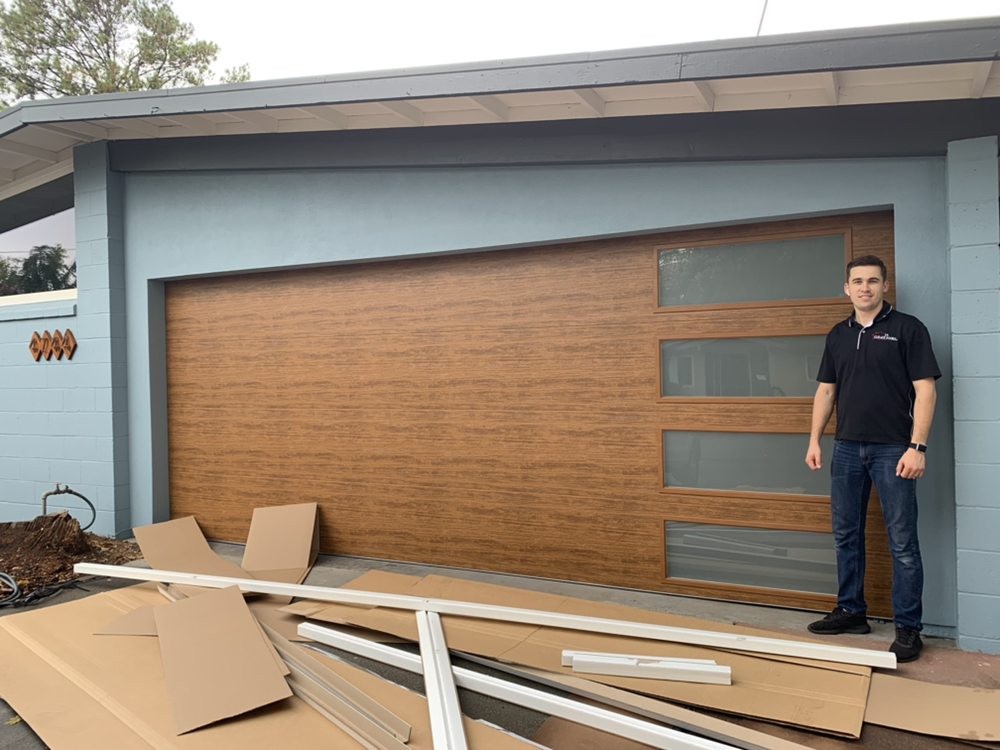
Considering a new door? 1A Garage Doors gives free estimates on new doors. Call (916) 838-8182 or see our garage door installation page.


Share: